9 Proven HVAC Maintenance Tips to Save Money Year-Round
HVAC maintenance is one of the simplest ways to protect your home comfort while keeping heating and cooling costs under control. Your HVAC system works throughout the year to maintain a comfortable indoor temperature, and regular maintenance helps it operate efficiently during both hot and cool weather.
Without routine care, small problems can develop into expensive repairs, reduced efficiency, poor airflow, and premature system replacement. A dirty filter, restricted airflow, worn electrical components, or low refrigerant level may not seem serious at first, but these issues can make your system work harder and consume more energy.
The good news is that many HVAC problems can be identified or prevented with professional maintenance and a few simple homeowner habits.
If you’re wondering whether HVAC maintenance is worth the investment, the answer depends on your system, its condition, and how it is used. However, routine maintenance can help improve efficiency, support reliable operation, and identify developing problems before they become larger issues.
Here are 9 proven HVAC maintenance tips that can help you save money year-round while keeping your Pensacola home comfortable.
1. Replace Your HVAC Air Filter Regularly
One of the easiest HVAC maintenance tasks is also one of the most important: changing the air filter.
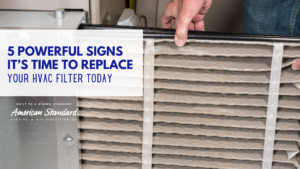
Your HVAC filter catches dust, dirt, pet hair, and other airborne particles before they circulate through your system. Over time, the filter becomes loaded with debris. A heavily restricted filter can reduce airflow and force your HVAC system to work harder to heat or cool your home.
When your system has to run longer to reach the thermostat setting, your energy use can increase.
How frequently you should replace the filter depends on the filter type, household conditions, pets, and system requirements. Some filters may need replacement every one to three months, while others have different service intervals.
Check the manufacturer’s recommendations and inspect your filter regularly.
A clean filter can help support proper airflow, protect HVAC components, and maintain more consistent comfort throughout your home.
2. Schedule Professional HVAC Maintenance
Professional HVAC maintenance is an important part of year-round system care.
While homeowners can handle simple tasks such as replacing filters and keeping vents clear, trained HVAC professionals can inspect components that require specialized knowledge and equipment.
During an HVAC maintenance appointment, a technician may inspect electrical connections, system controls, airflow, refrigerant-related components, coils, blower components, and other parts depending on the type of system.
Professional maintenance can also reveal developing problems that may not be obvious to a homeowner.
Finding a worn or malfunctioning component early may give you an opportunity to address it before it causes a more expensive breakdown.
Regular maintenance is particularly important before periods of heavy HVAC use. Having your system checked before the cooling or heating season can help ensure it is prepared for the workload ahead.
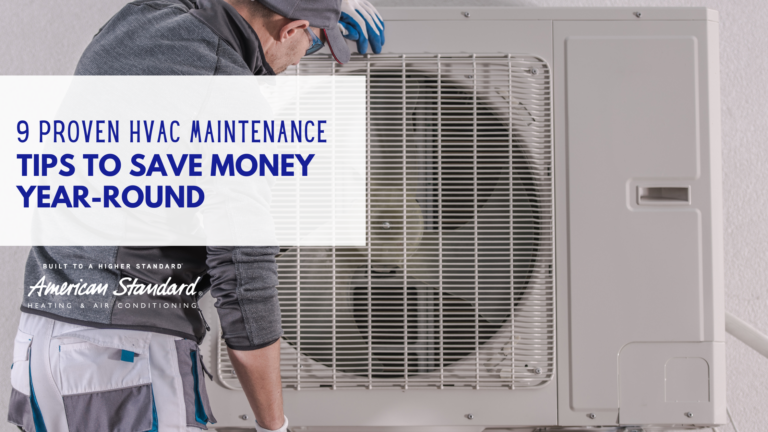
3. Keep Your Outdoor AC Unit Clean and Clear
If you have an outdoor air conditioning or heat pump unit, the area surrounding it matters.
Leaves, grass clippings, dirt, branches, and other debris can accumulate around the outdoor equipment. Restricted airflow can make it harder for the system to transfer heat effectively.
Keep the area around the outdoor unit reasonably clear and follow the manufacturer’s recommended clearance requirements.
You should also avoid placing objects, storage items, plants, or decorations directly against the equipment.
Homeowners can remove loose debris from around the unit, but avoid bending delicate components or attempting to clean internal parts without proper knowledge.
During professional maintenance, an HVAC technician can inspect and clean appropriate components as needed.
Keeping the outdoor unit clear supports proper airflow and can help your HVAC system operate more efficiently.
4. Check Your Vents and Registers
Your HVAC system can only distribute conditioned air effectively if air can move freely through the home.
Blocked or closed vents can interfere with airflow and contribute to uneven temperatures. Furniture, rugs, curtains, boxes, and other household items can accidentally cover registers.
Take a quick walk through your home and check that supply registers and return grilles are not blocked.
You should also avoid closing large numbers of vents in an attempt to redirect heating or cooling to certain rooms. Your HVAC system is designed to operate with a specific airflow balance, and changing that balance can create unwanted pressure and performance issues.
If certain rooms consistently feel too hot or too cold despite open vents and a clean filter, there may be an underlying airflow or ductwork issue.
A professional HVAC inspection can help determine what is causing the uneven comfort.
5. Inspect Your Thermostat Settings
Your thermostat controls when your HVAC system operates, so its settings can have a direct effect on energy consumption.
Avoid making frequent, extreme temperature adjustments in an attempt to quickly heat or cool your home. Instead, choose comfortable settings that make sense for your household and adjust them gradually when appropriate.
If your thermostat appears inaccurate, has a blank display, or does not seem to respond correctly, it may need attention.
Thermostat problems can sometimes be related to batteries, wiring, system communication, or the thermostat itself. A professional can determine whether the thermostat is functioning correctly and communicating properly with the HVAC system.
For homeowners interested in additional control over their heating and cooling schedules, a compatible programmable or smart thermostat may also help manage HVAC operation. However, compatibility should always be confirmed before replacing your existing thermostat.
6. Don’t Ignore Unusual HVAC Noises or Odors
Your HVAC system will make some normal operating sounds, but sudden or unusual noises should not automatically be ignored.
Grinding, squealing, rattling, buzzing, clicking, or repeated cycling sounds may indicate that a component needs attention.
Unusual odors can also deserve investigation. A persistent burning smell, electrical odor, musty smell, or other unfamiliar odor may have different possible causes.
Ignoring these warning signs can allow a relatively small problem to develop into a more expensive repair.
If your HVAC system suddenly sounds or smells different, turn your attention to the change rather than assuming it will resolve itself.
Some issues may be minor, while others require professional service. Having the system inspected can help identify the source before additional damage occurs.
7. Pay Attention to Rising Energy Bills
Your utility bill can sometimes provide an early warning that your HVAC system is not operating as efficiently as it should.
Energy costs naturally vary based on weather, thermostat settings, utility rates, home occupancy, and other factors. However, an unexplained increase in heating or cooling costs may warrant a closer look at your HVAC system.
A system that runs longer than normal or struggles to reach the thermostat setting may be dealing with an airflow restriction, dirty component, thermostat issue, refrigerant problem, ductwork concern, or another mechanical issue.
Regular HVAC maintenance gives a technician an opportunity to evaluate system performance and identify potential sources of inefficiency.
Addressing the underlying problem can help prevent continued energy waste and restore more consistent operation.
8. Have Ductwork and Airflow Problems Checked
Your HVAC system is only part of the comfort equation. The ductwork that moves conditioned air throughout your home also plays an important role.
Leaks, disconnected sections, damaged ducts, or poorly distributed airflow can affect how efficiently conditioned air reaches different rooms.
You might notice signs such as:
- Rooms that are consistently warmer or cooler than others
- Weak airflow from certain registers
- Excessive dust around some vents
- HVAC system running for long periods
- Difficulty maintaining the desired temperature
- Increased energy costs without a clear explanation
These symptoms can have several possible causes, so they should not automatically be blamed on ductwork.
An HVAC professional can evaluate airflow and inspect accessible ductwork to determine whether repairs or other solutions are appropriate.
Improving airflow can help your HVAC system deliver conditioned air more effectively and may improve overall comfort.
9. Address Small HVAC Problems Before They Become Expensive
One of the most valuable HVAC maintenance habits is simple: don’t ignore small problems.
A minor issue may not seem urgent when the system is still producing heating or cooling. However, continuing to operate a system with a developing problem can sometimes place additional strain on other components.
For example, unusual cycling, weak airflow, inconsistent temperatures, strange sounds, or a system that struggles to maintain the thermostat setting can all be reasons to schedule an inspection.
This does not mean every unusual symptom will lead to an expensive repair. In many cases, the cause may be relatively straightforward.
The important point is that early attention gives you more information about the condition of your HVAC system.
Routine maintenance can help you stay ahead of unexpected breakdowns, plan for repairs, and make more informed decisions about eventual HVAC replacement.
Why HVAC Maintenance Matters Year-Round
HVAC maintenance should not be viewed as something you only think about when the weather changes.
In Pensacola, homes can experience extended periods of warm and humid weather, followed by cooler temperatures during the winter. Your HVAC system may switch between cooling and heating throughout the year, depending on outdoor conditions.
That means year-round HVAC care can be particularly valuable.
During warmer months, efficient air conditioning operation can help maintain indoor comfort while managing energy consumption. During cooler periods, proper heating operation helps keep your home comfortable when temperatures drop.
Regular maintenance also gives you a chance to evaluate the overall condition of your equipment.
Instead of discovering a major problem during an especially hot or cold day, you may be able to identify developing issues during a scheduled maintenance visit.
How Much Money Can HVAC Maintenance Save?
There is no single dollar amount that every homeowner will save through HVAC maintenance.
Savings depend on many factors, including the age and condition of your equipment, system efficiency, usage, thermostat settings, weather, electricity rates, airflow, and whether the system has existing problems.
However, maintenance can help protect efficiency and reduce avoidable problems.
For example, replacing a clogged filter is inexpensive compared with dealing with a system that has been operating with restricted airflow for an extended period. Likewise, identifying a worn component during a maintenance visit may provide an opportunity to repair it before it contributes to a larger system failure.
Maintenance also helps homeowners understand the condition of their equipment.
If a system is approaching the end of its expected service life and requires increasingly frequent repairs, knowing that ahead of time can give you more time to research replacement options rather than making a rushed decision after a breakdown.
HVAC Maintenance and Indoor Air Quality
Regular HVAC maintenance can also contribute to better indoor air quality.
Your heating and cooling system circulates air throughout your home. Filters help capture airborne particles, while properly maintained equipment and ductwork can support clean and effective airflow.
Homeowners should still address indoor air quality concerns separately when necessary. Excess humidity, dust, odors, and airborne particles can have multiple sources, and HVAC maintenance alone may not resolve every indoor air quality problem.
Depending on your home’s needs, an HVAC professional may be able to recommend appropriate filtration, air purification, humidity control, or other solutions.
The goal is to create a comfortable indoor environment while ensuring your HVAC system is operating properly.
What Homeowners Can Do Between Maintenance Visits
Professional HVAC maintenance is important, but homeowners can also take simple steps between service appointments.
Start with the basics:
- Check and replace your HVAC filter as needed.
- Keep supply vents and return grilles clear.
- Keep the outdoor unit area free of loose debris.
- Pay attention to unusual sounds and odors.
- Watch for changes in airflow.
- Monitor unexplained changes in energy costs.
- Keep the thermostat operating properly.
- Schedule professional service when problems appear.
These simple habits can help you stay aware of your HVAC system’s condition.
They also make it easier to recognize changes that may require professional attention.
When Should You Schedule HVAC Maintenance?
A good maintenance schedule depends on your HVAC system, manufacturer’s recommendations, usage, and household needs.
Many homeowners schedule professional HVAC maintenance at least once a year, while some systems or household circumstances may warrant more frequent attention.
If your system has been experiencing repeated problems, long run times, inconsistent temperatures, unusual noises, or increasing energy costs, it may be time for an inspection even if you recently had maintenance performed.
Professional HVAC service is not simply about fixing something that has already broken. It can also help identify conditions that could affect system performance and reliability.
Frequently Asked Questions About HVAC Maintenance
How often should HVAC maintenance be performed?
Many homeowners schedule professional HVAC maintenance once a year, although the ideal schedule can vary depending on the equipment and household. Follow the manufacturer’s recommendations and ask your HVAC professional what schedule makes sense for your system.
Does HVAC maintenance really save money?
HVAC maintenance can help support efficient operation, identify developing problems, and reduce the likelihood of some unexpected repairs. The actual savings vary depending on the system, its condition, usage, and other factors.
What happens during HVAC maintenance?
A professional HVAC maintenance visit may include inspecting system components, checking electrical connections and controls, evaluating airflow, examining coils and other components, and looking for signs of wear or developing problems. The exact service depends on the HVAC system.
How often should I change my HVAC filter?
Filter replacement frequency depends on the filter, HVAC system, household conditions, pets, and other factors. Check the manufacturer’s recommendations and inspect the filter regularly. Replace it when it becomes dirty or according to the recommended service interval.
Can HVAC maintenance lower my energy bills?
Proper maintenance can help your HVAC system operate as designed, which may help reduce unnecessary energy use. However, energy bills are affected by many factors, including weather, thermostat settings, home insulation, equipment efficiency, and utility rates.
What are signs my HVAC system needs maintenance?
Common warning signs include unusual noises, strange odors, weak airflow, inconsistent temperatures, frequent cycling, longer-than-normal run times, and unexplained increases in energy costs. These symptoms can have different causes, so professional evaluation may be appropriate.
Is HVAC maintenance necessary if my system is working?
Yes. An HVAC system can continue operating while developing problems that are not immediately obvious. Routine maintenance can help identify wear, performance concerns, and other issues before they become more serious.
Can I perform HVAC maintenance myself?
Homeowners can handle basic tasks such as replacing filters, keeping vents clear, and removing loose debris around an outdoor unit. More technical inspections, electrical work, refrigerant service, and component repairs should be handled by qualified HVAC professionals.
When is the best time to schedule HVAC maintenance?
Scheduling maintenance before periods of heavy heating or cooling use can help ensure your system is ready for increased demand. However, if you notice a problem, you should not wait for a particular season to have it inspected.
Contact Shannon’s Heating & Cooling
If you’re interested in learning more about HVAC maintenance, improving your home’s energy efficiency, or keeping your heating and cooling system operating reliably year-round, contact us at 850-698-3101. Shannon’s Heating & Cooling is a trusted American Standard Heating & Air Conditioning Dealer in Pensacola, FL. Our professional staff can answer any questions you might have. We will also make recommendations as to which maintenance services or HVAC solutions will work best for your individual situation. Feel free to email us at [email protected] with any questions or inquiries. Be sure to follow us on Facebook and Instagram!